
Most multivitamins are trash. Here’s why you need to upgrade to a methylated, iron-free multivitamin if you want actual results.
Walk down the supplement aisle of your local grocery store. It’s a graveyard of cheap, ineffective pills designed to make you feel like you’re doing something good for your health while doing absolutely nothing for your physiology.
If you are serious about performance, longevity, or just not feeling like garbage, you need to stop buying fruit gummy bears and capsules with synthetic cheap ingredients. a
Specifically, you need to understand two things: methylation and iron toxicity. Most adults are taking vitamins their bodies can’t use, packed with a mineral they likely have too much of already or in a form that will just accumulate in their body.
Let’s fix that.
The "Expensive Urine" Myth Is Only Half True
You’ve heard the skeptics. They say taking vitamins just gives you "expensive urine."
They aren't entirely wrong, but they are missing the point. You get expensive urine when you take garbage supplements. When you ingest synthetic, non-bioavailable forms of vitamins and minerals like iron, your body doesn't recognize them. It can’t absorb them. So, it flushes them out or they accumulate in the body causing havoc.
But when you take high-quality, bioavailable nutrients, your body actually uses them. The problem isn't the concept of supplementation; it's the execution.
Cheap multis are filled with fillers, binders, and the cheapest possible versions of nutrients. We are talking about forms of magnesium that act more like laxatives than muscle relaxants, and forms of B-vitamins that require complex enzymatic conversions your body might not be able to handle.
The MTHFR Problem: Why Your B-Vitamins Are Useless
Let's get technical for a second. There is a gene called MTHFR (methylenetetrahydrofolate reductase). It provides instructions for making an enzyme that processes folate.
Here is the kicker: A massive chunk of the population has a mutation in this gene. Estimates suggest that up to 40% of people have some variation of the MTHFR gene mutation.
If you are one of them, your body struggles to convert synthetic folic acid—the stuff found in almost every cheap multivitamin and fortified processed food—into the active form, 5-methyltetrahydrofolate (5-MTHF).
When you can't methylate properly, a few bad things happen:
- Homocysteine levels rise: This is a major marker for cardiovascular inflammation.
- Detoxification slows down: Methylation is crucial for processing toxins and hormones.
- Neurotransmitters tank: You need methylation to produce serotonin, dopamine, and norepinephrine.
If you are taking a multivitamin with "Folic Acid" listed on the label, and you have this mutation, you aren't just wasting money. You might be gumming up your cellular machinery with unmetabolized folic acid.
Even if you do not have the MTHFR gene, you will likely only convert a small amount of folic acid into folate, thus creating the expensive urine problem.
The Solution: Methylated B-Vitamins and Other Bioavailable Forms
The fix is simple but requires reading labels. You need a multivitamin that does the work for you.
- Look for Methylfolate (or 5-MTHF) instead of Folic Acid.
- Look for Methylcobalamin instead of Cyanocobalamin (Vitamin B12).
- Look for Retinyl instead of Beta Carotene (Vitamin A)
The Primary 3 Red Flags
Folic Acid is a man made version of folic that your body has to convert into folate. Some studies suggest this conversion is highly inefficient and left over folic acid may even build up in your system causing unexpected consequences. The science isn't fully settled, but our opinion is that it should be avoided.
Cyanocobalamin is the cheap, synthetic form of B12. It contains a cyanide molecule. Yes, cyanide. While the amount isn't toxic, your body still has to cleave off that cyanide molecule and excrete it before it can use the B12. Why make your liver work harder than it has to?
Methylcobalamin is the active, bioavailable form. Your body absorbs it and puts it to work immediately supporting energy production and nerve health.
Beta Carotene is the cheap form of Vitamin A found in vegetables like carrots. Like the other cheap vitamins, the body has to convert this nutrient into the usable form Retinyl. Again, if you take Beta Carotene you may think you are getting Vitamin A, but in reality you may not be absorbing much of anything.
The Iron Paradox: Rusting from the Inside Out
Now let's talk about the other half of the equation: Cheap Iron.
Iron is essential. Without it, you can't transport oxygen in your blood. If you are anemic, you feel weak, tired, and cold.
However, most adult men and postmenopausal women are not anemic. In fact, many are trending toward the opposite end of the spectrum: iron overload.
Unlike other minerals, your body has no active mechanism to excrete excess iron. You only lose it through blood loss. Women of menstruating age lose iron monthly, which protects them. But men? And women after menopause? You accumulate iron, especially inorganic or cheap iron.
Iron is also the reason some multivitamins make people sick to their stomach.
Why Excess Iron is Dangerous
Iron is a pro-oxidant. Think about what happens to metal left out in the rain. It rusts. That is oxidation.
Excess unbound iron in the body acts similarly. It catalyzes the formation of free radicals, causing oxidative stress. This "rusting" damages cells, DNA, and tissues.
High iron stores (measured by ferritin levels) have been linked to:
- Increased risk of heart disease
- Liver damage
- Insulin resistance and diabetes
- Neurodegenerative diseases
If you are a man eating red meat, eggs, bull testicle, and leafy greens, you are almost certainly getting enough iron from your diet.
Unless you have bloodwork confirming iron-deficiency anemia, you do not need a multivitamin with excess iron (especially cheap iron).
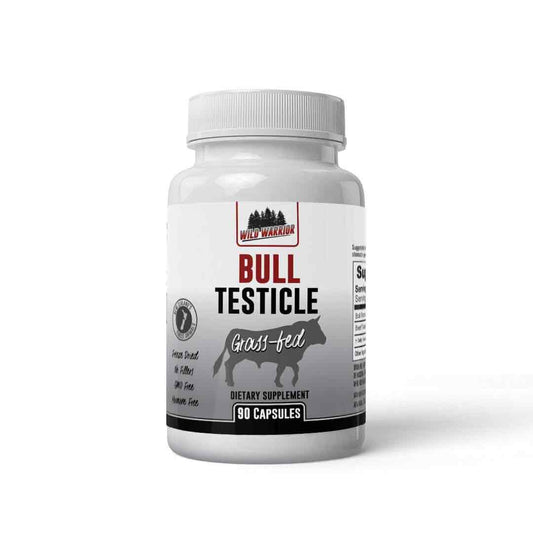
If you need iron, consider our Bull Testicle capsules which are loaded with bioavailable Heme Iron.
What a Real Multivitamin Looks Like
So, what should you be looking for? Try our Methylated Multivitamin for Men.
A high-performance multivitamin isn't about hitting 100% of the Daily Value (DV) for every single nutrient. It’s about filling the gaps in a modern diet with nutrients your body can actually absorb.
Here is our checklist for making a superior multivitamin:
- No Iron: Unless prescribed by a doctor.
- Methylated Folate: Look for Methylfolate
- Methylated B12: Methylcobalamin is king.
- Chelated Minerals: Look for minerals bound to amino acids (like glycinate or bisglycinate). Magnesium bisglycinate is far superior to magnesium oxide.
- Active Vitamin B6: Look for P-5-P (Pyridoxal-5-Phosphate) rather than Pyridoxine HCl.
- Retinyl: Avoid multis with Beta Carotene
Supplements are tools. You wouldn't try to bench press with a rusted, bent barbell. Don't try to build your health with rusted, broken nutrients.
Stop buying the cheapest bottle on the shelf. The few extra dollars you spend on a a high quality methylated, iron-free multivitamin pays dividends in how you feel, how you perform, and how you age.
Your body is a high-performance machine. Fuel it like one.